
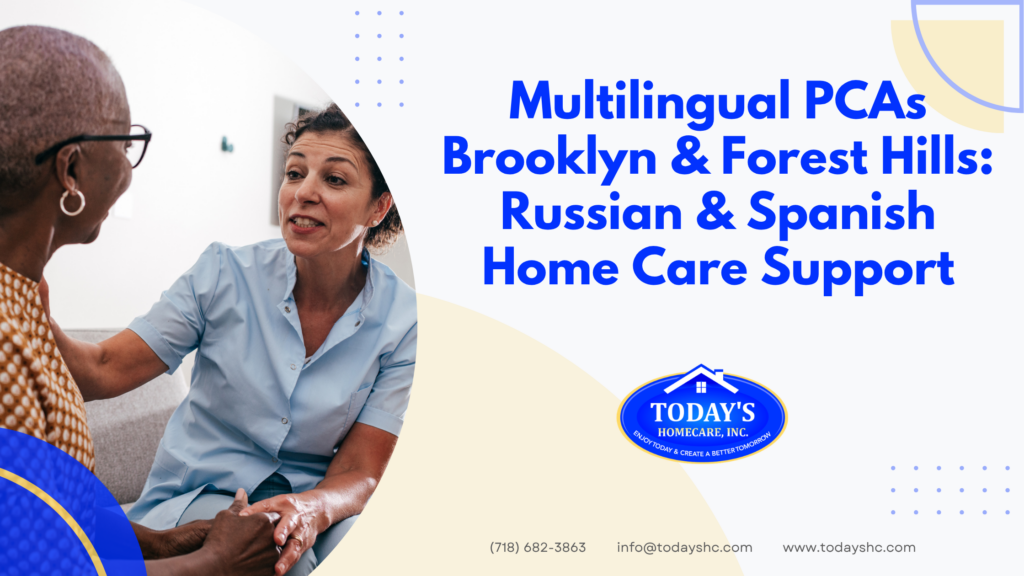
Finding the right personal care aide is not only about daily tasks. For many families in Brooklyn and Forest Hills, language comfort matters just as much as care experience. Russian and Spanish-speaking PCAs help seniors feel understood, respected, and more confident at home.
Why Multilingual PCAs Matter for Local Families
Language can shape the entire care experience. When seniors speak with an aide in their preferred language, they can explain needs, ask questions, and build trust more easily.
This is especially important in Brooklyn and Forest Hills, where many families come from Russian-speaking and Spanish-speaking communities.
What a Multilingual PCA Provides
A multilingual personal care aide supports daily living while communicating in the client’s preferred language. This may include help with bathing, dressing, meals, mobility, reminders, and companionship.
Families can explore Certified Personal Care Aides for structured support at home.
Russian-Speaking PCA Support
Russian-speaking PCAs can help seniors feel more relaxed during daily care. Familiar language often reduces confusion and makes routines smoother.
This support may be helpful for older adults who prefer Russian for health conversations, personal needs, and companionship.
Spanish-Speaking PCA Support
Spanish-speaking PCAs help clients communicate clearly during personal care and daily activities. This can improve comfort, cooperation, and emotional connection.
For families seeking broader care options, Home Health Care Services may provide additional support.
Common Communication Challenges in Home Care
Language barriers can make simple tasks harder than they need to be. Misunderstandings may affect meals, schedules, hygiene routines, or reminders.
Missed details: Important care needs may not be fully understood.
Less comfort: Seniors may feel hesitant to speak openly.
Family stress: Relatives may worry about communication gaps.
How Families Can Arrange Multilingual PCA Care
The process usually starts with a care discussion. Families share the client’s language preference, care needs, schedule, and daily routine.
Assessment: Review personal care and safety needs.
Language match: Request Russian or Spanish-speaking support.
Care plan: Build a routine that fits the client’s home life.
Comparing Multilingual PCAs With Standard Care
Standard PCA care can meet many daily needs. Multilingual PCA care adds another layer of comfort through clearer communication.
For seniors who primarily speak Russian or Spanish, this difference can make care feel more personal and less stressful.
Medicaid and Payment Guidance
Some families may qualify for programs that help with home care costs. Eligibility depends on the client’s needs, income, and program requirements.
Today’s Homecare, Inc. offers Medicaid Application Guidance to help families better understand available options.
Waiver and Private Care Options
Clients with specific needs may benefit from waiver-based or private care support. These options can help families choose the right level of service.
Helpful resources include NHTD & TBI Waiver Services and Private Home Healthcare.
Local Care Needs in Brooklyn and Forest Hills
Brooklyn and Forest Hills both have strong cultural communities. Many seniors feel more comfortable when care respects language, food preferences, routines, and family traditions.
Local home care support helps families keep loved ones safe while preserving familiar daily habits.
When Multilingual PCA Care May Be the Right Choice
Language-matched care may be helpful when a senior avoids speaking, struggles to explain needs, or feels isolated with English-only support.
It may also help after hospital discharge, during long-term care planning, or when family caregivers cannot be present every day.
Frequently Asked Questions About Multilingual PCAs
Families often ask how language-matched care works before starting services. These answers offer a clear starting point.
Can I request a Russian-speaking PCA in Brooklyn?
Yes. Families can request Russian-speaking support based on availability and care needs. A care discussion helps identify the best match.
Can I request a Spanish-speaking PCA in Forest Hills?
Yes. Spanish-speaking PCA support may be available for clients in Forest Hills and nearby communities. The agency can review language needs during intake.
Do multilingual PCAs provide personal care?
Yes. Multilingual PCAs can assist with daily personal care, routines, mobility, meals, and companionship while communicating in the client’s preferred language.
Can Medicaid help pay for multilingual home care?
Medicaid may help eligible clients access home care services. Families can review options through Medicaid guidance and related support programs.
Contact Today’s Homecare, Inc. for Multilingual PCA Support
The right caregiver can make home care feel safer, easier, and more personal. For Russian and Spanish-speaking families in Brooklyn and Forest Hills, language-matched support can bring real peace of mind.
Today’s Homecare, Inc. provides compassionate home care services from Brooklyn, NY.
Phone: (718) 650-3558
Email: info@todayshc.com
Website: Today’s Homecare, Inc.