
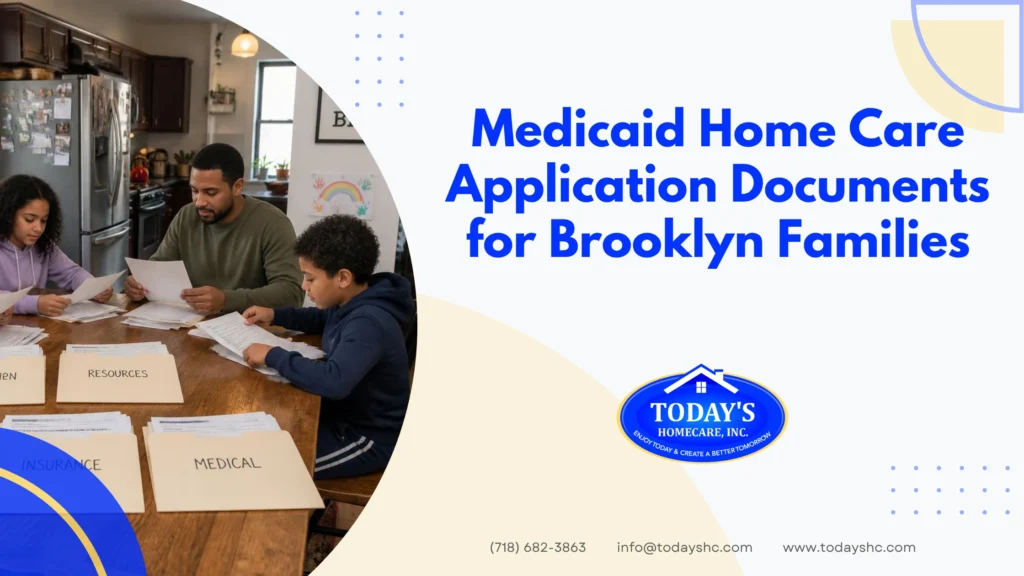
| Quick Answer A Medicaid home care application may require identity, residency, income, resources, insurance, household, and medical-need information. Brooklyn families should use the exact checklist from HRA or the responsible agency, submit readable copies by the stated deadline, and keep proof of every delivery. |
The hardest part of an application is often not one form. It is collecting documents from banks, insurers, physicians, landlords, spouses, representatives, and prior addresses while deadlines continue to run.
Requirements differ based on age, disability, coverage category, household, income, resources, immediate need, and whether the person already has Medicaid. A generic internet checklist should never replace the written request for that case.
Build a Master Identity and Household Folder
Begin with documents that establish who is applying, where the person lives, and who has authority to help. Names and addresses should be consistent across the application.
- Collect government identification, Social Security information, citizenship or eligible immigration documents, date-of-birth records, and proof of New York residence as requested.
- Include marriage, separation, divorce, death, guardianship, power-of-attorney, or authorized representative documents when they affect the case.
- List every household member required by the application and explain recent address or household changes rather than leaving conflicting records unresolved.
- Make a contact sheet for the applicant, representative, physician, hospital or discharge planner, pharmacy, and any current home care provider.
Use the applicant’s legal name consistently. If a document uses another name, add the supporting name-change or relationship record requested by the agency.
Related service: Medicaid application guidance
Organize Income, Resources, and Insurance Evidence
Financial eligibility reviews depend on complete periods and clear ownership. One current statement may not answer questions about deposits, transfers, or jointly held accounts.
- Gather benefit letters, pension statements, pay records, tax information, rental income, annuity or retirement distributions, and other recurring income evidence.
- Collect the requested bank, investment, retirement, trust, life-insurance, property, and other resource documents for the required lookback or statement period.
- Provide health insurance cards, premium statements, Medicare information, long-term care insurance, and explanations of other available coverage.
- Label unusual deposits, closed accounts, transfers, property transactions, or jointly owned resources so the reviewer can identify the source and purpose.
Do not move or retitle assets based on casual advice. Medicaid financial planning can have serious legal and eligibility consequences and should be reviewed by a qualified professional.
Related service: home health care services
Coordinate Medical and Home Care Forms
Financial eligibility and home care authorization are related but not identical steps. The case may also need current medical documentation and an assessment of the requested support.
- Ask the responsible office which practitioner order, statement of need, immediate-need attestation, or assessment form applies to the current situation.
- Schedule medical appointments early enough for the practitioner to complete accurate forms and return them before the agency deadline.
- Provide a practical description of daily living difficulties, safety concerns, cognition, mobility, continence, medication support, and unpaid help already available.
- Keep discharge records, diagnoses, therapy notes, equipment information, and prior service plans ready when they help explain the need, but submit only what is requested or relevant.
A vague statement that the person “needs help” is less useful than clear examples of the tasks, frequency, supervision, and risks involved.
Create Proof of Submission and a Follow-Up Log
Applications can involve mailed packets, online uploads, faxed forms, office delivery, and later requests for missing information. A tracking system protects the family from relying on memory.
- Scan the completed application and every attachment before submission, keeping pages in the same order as the checklist.
- Save confirmation numbers, certified mail receipts, fax reports, upload screenshots, or stamped copies showing when the material was delivered.
- Record each call with the date, number, representative, case reference, question, answer, and promised next step.
- Respond to written requests by the stated deadline and include the notice page so the added documents are matched to the correct case.
Today’s Homecare may assist families with application guidance, but applicants should preserve direct communication with HRA, the local district, Medicaid, and any legal or financial advisor involved.
Frequently Asked Questions
Can photocopies be submitted instead of original documents?
Follow the application instructions. Many items are submitted as copies, but some documents may require certification, verification, or later inspection. Never send an irreplaceable original unless specifically required and tracked.
What if a bank statement or benefit letter is missing?
Request a replacement immediately and notify the case contact if the deadline may be affected. Submit available documents with a written explanation only when the agency instructs you to do so.
Does existing Medicaid mean home care begins automatically?
No. The coverage must support the requested community-based long-term care, and the person may still need medical orders, assessments, eligibility review, and service authorization.
Can a family member complete the application?
An authorized representative may be able to help with the applicant’s permission and proper documentation. The applicant or legal representative remains responsible for accurate, complete information.
How We Can Help
Today’s Homecare offers Medicaid application guidance for families in Brooklyn, Queens, and surrounding New York City communities. Call (718) 682-3863 to discuss the available support.
General information notice: This material is not legal or financial advice and does not guarantee Medicaid eligibility, home care hours, or approval. Use the current instructions issued for the applicant’s case.